
The Flat Cousin: Reno Mattresses and the Art of Channel Armor
Not every gabion is meant to hold back a hillside. A related product, developed by the same Italian firm that industrialized the gabion in the 1890s and named after the Reno River where that story began, takes a very different shape for a very different job.
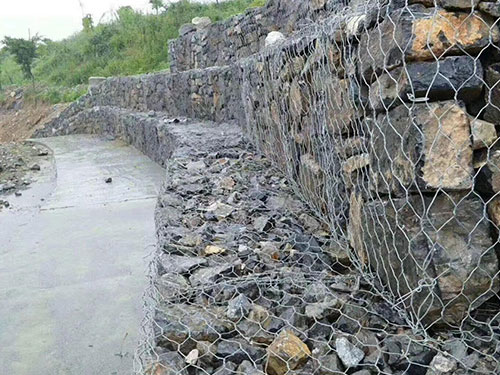
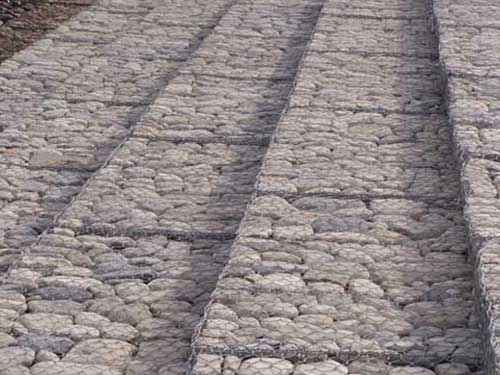
A Reno mattress is essentially a gabion flattened out. Where a standard gabion basket is typically half a meter or more in height, a mattress is a shallow, wide panel — commonly somewhere between 150 and 500 millimeters thick, but several meters long and wide — filled with smaller stone than a box gabion would use. The goal is not to retain earth but to armor a surface: the bed and banks of a river channel, the slope beneath a bridge, the apron around a weir, or a stretch of shoreline prone to scour.
Internally, a mattress is divided by wire diaphragms into a series of compartments, typically spaced roughly a meter apart, each filled separately with stone during construction. This compartmentalization matters more than it might seem. Without internal divisions, stone inside a large flat panel could migrate toward low points if the ground beneath shifted unevenly, leaving thin, weak patches elsewhere in the blanket. With diaphragms in place, the stone stays distributed evenly enough that the mattress keeps intimate, protective contact with the soil beneath it even as that soil settles or scours around the edges over time.
The physics of protection is straightforward: fast-flowing water erodes bare soil easily but has far more trouble dislodging a heavy, interlocked layer of rock. The mattress's permeability also helps, letting water pass through rather than scouring beneath a solid barrier the way it might undermine an impermeable concrete slab. Fine sediment carried by the current gradually settles into the remaining gaps between stones, and given enough time, vegetation often takes root in that accumulated sediment, further stabilizing the surface and softening the structure's appearance.
Reno mattresses today are manufactured to the same family of technical standards as box gabions — commonly ASTM A975 in the United States — but specified with a lower profile and finer mesh appropriate to their thinner stone fill. Typical applications include lining drainage and irrigation channels, protecting the ground around bridge piers and abutments from scour, forming the apron at the base of taller gabion retaining walls (where undermining would otherwise threaten the wall above), and armoring shorelines in relatively sheltered coastal settings. It is a quieter, flatter piece of engineering than a towering gabion wall, but in many riverworks projects, it is doing just as much of the essential work.

Check more information about gabions?
Tell us your request and get a free quote